No obligation. Availability varies by location and home layout.
6 Leading BrandsCompared side by side
Multiple Elevator TypesTraditional, shaftless and glass
Professional InstallationCustomized to the home
Free QuotesNo-obligation consultations
Home elevators are becoming an increasingly practical way to make
multi-level homes safer, more accessible and easier to enjoy.
Once viewed primarily as a luxury feature, residential elevators are now
available in compact and space-conscious designs that can be installed in
both new and existing homes. Options range from traditional elevators
inside a constructed hoistway to shaftless elevators that travel through
an opening between two floors.
The best home elevator will depend on your home’s layout, the number of
floors you need to reach, available space, mobility requirements, design
preferences and budget.
Leading home elevator providers and manufacturers include AmeriGlide,
Savaria, Garaventa Lift, Pollock, Bruno and Inclinator. Together, these
brands offer traditional, through-floor, shaftless, outdoor and panoramic
elevator options.
Important: Exact product availability, specifications,
code requirements and pricing vary by model and location. A professional
home evaluation is required before selecting an elevator.
Our Top Selections
Best Home Elevator Brands at a Glance
These brands offer a strong range of residential elevator solutions for
different homes, mobility needs and project sizes.
Best Value & Published Pricing
AmeriGlide Home Elevators
AmeriGlide offers indoor, through-floor and outdoor residential
elevators, with published equipment prices starting at $15,999.
Popular models: Affinity, Victorian, Elite Plus and
Coastal Outdoor.
The Affinity is a compact two-person, two-stop through-floor elevator. It
uses a hydraulic pump, has a 550-pound capacity and does not require a pit.
Its small cab is designed primarily for standing passengers rather than
most wheelchair users.
AmeriGlide Elite Plus
The Elite Plus is a roped-hydraulic residential elevator with a
1,000-pound capacity, up to four landings and up to 40 feet of travel. It
uses a traditional hoistway and offers several cab sizes and finish choices.
AmeriGlide Victorian
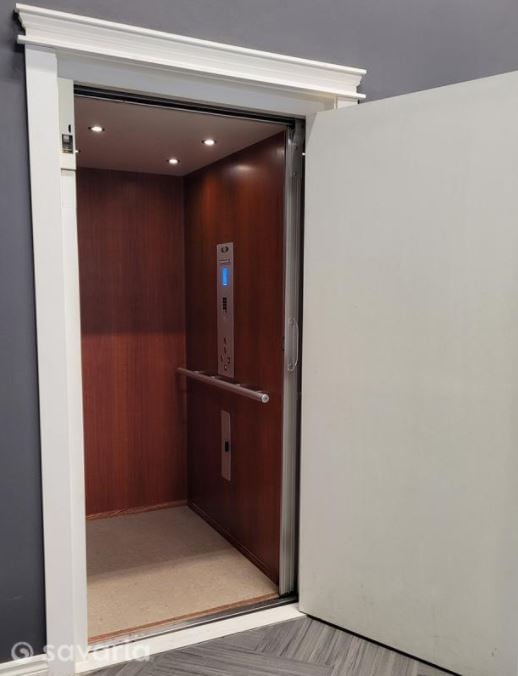
The Victorian is a customizable winding-drum elevator available with
different cab styles, wood finishes, doors, fixtures and design options. It
is intended for homeowners who want a traditional elevator that can blend
with the home’s interior.
AmeriGlide Coastal Outdoor
The Coastal is an outdoor residential elevator with an 800-pound capacity,
two landings and up to 14 feet of travel. Its aluminum cab frame, galvanized
rails and polycarbonate panels are designed for exterior use.
Advantages
Published residential equipment prices starting at $15,999
Compact through-floor and traditional hoistway choices
Outdoor residential elevator available
Hydraulic and winding-drum drive options
Models ranging from 550- to 1,000-pound capacity
Considerations
Advertised prices are not complete installed-project prices
Shipping, construction, electrical work and permits may cost extra
The Affinity’s compact cab may not suit most wheelchair users
Local code approval and service availability must be confirmed
Our assessment: AmeriGlide is a strong option for
homeowners who value published starting prices and want to compare compact,
traditional and outdoor residential elevator styles from one provider.
Best Overall Selection
Savaria Home Elevators Review
Savaria manufactures several types of residential elevators,
allowing homeowners to compare traditional, through-floor and
panoramic glass designs within one brand.
EclipseInfinityTelecabVuelift MiniVuelift
Savaria is a strong choice for homeowners who want a wide selection
of cab configurations, drive systems, finishes and installation
styles.
The Eclipse is a traditional home elevator installed inside a
constructed hoistway. Its machine-roomless configuration can reduce the
amount of separate mechanical space needed in the home.
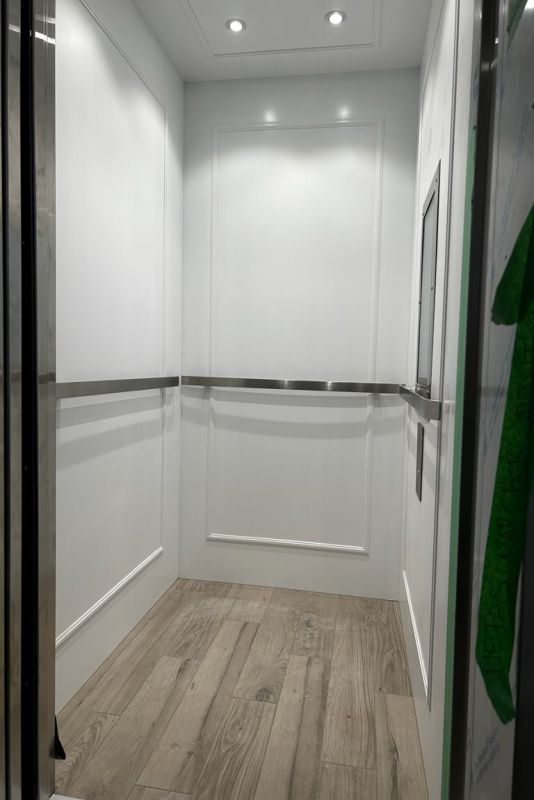
It is available with different cab sizes, entry arrangements, wall
finishes, fixtures, handrails and door options.
Savaria Infinity
The Infinity is a hydraulic residential elevator known for smooth,
quiet travel and extensive customization. It can serve several floors
and is suited to larger renovation or new-construction projects.
Savaria Telecab
The Telecab is a through-floor elevator designed to travel between two
levels. It does not require a complete conventional elevator shaft,
making it an option for existing homes where space or construction is a
concern.
Savaria Vuelift and Vuelift Mini
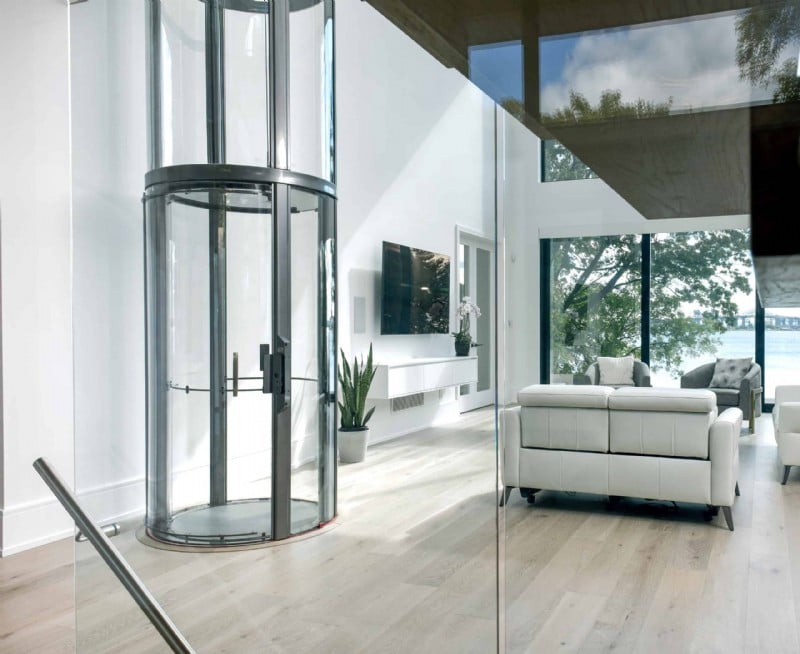
The Vuelift line uses a transparent glass or acrylic enclosure to create
a panoramic elevator that becomes an architectural feature within the
home.
The Vuelift Mini provides a smaller footprint, while the larger Vuelift
offers round and octagonal designs.
Advantages
Broad selection of elevator styles
Traditional, through-floor and panoramic options
Models for two floors or multiple floors
Many cab and fixture choices
Options for new and existing homes
Considerations
Traditional models require hoistway construction
Panoramic glass models are premium-priced
Availability varies by dealer and service area
Customized finishes can increase the final cost
Our assessment: Savaria is one of the strongest
overall choices because it offers suitable products for many different
types of home elevator projects.
Best Traditional Custom Elevator
Garaventa Home Elevators Review
Garaventa Lift manufactures residential and commercial
accessibility equipment, including traditional home elevators and
compact home-lift solutions.
Elvoron HRElvoron MRLUMA
Garaventa is especially appealing for homeowners who want a
traditional elevator with premium finishes, modern doors and
extensive customization.
The Elvoron is a traditional residential elevator installed inside a
constructed hoistway. It is available in hydraulic and machine-roomless
configurations.
Homeowners can choose from different cab sizes, doors, entry
arrangements, wall materials, fixtures, handrails and interior
finishes.
Premium sliding-door options can give the Elvoron the look and feel of
a modern commercial elevator while retaining residential dimensions.
Garaventa LUMA
The LUMA is a compact home lift intended for two-level travel. Its
self-supporting structure provides an alternative when building a full
traditional elevator hoistway is not practical.
Advantages
Traditional and compact options
Hydraulic and machine-roomless configurations
Premium automatic sliding doors available
Custom woods, metals, glass and fixtures
Suitable for accessibility and luxury projects
Considerations
Elvoron requires a constructed hoistway
Premium door systems can increase project cost
Construction must be coordinated with contractors
Not every model is available in every region
Our assessment: Garaventa is a strong option for
homeowners planning a professionally integrated traditional elevator
with premium doors and customized interior finishes.
Best Shaftless Home Elevator
Pollock Home Elevator Review
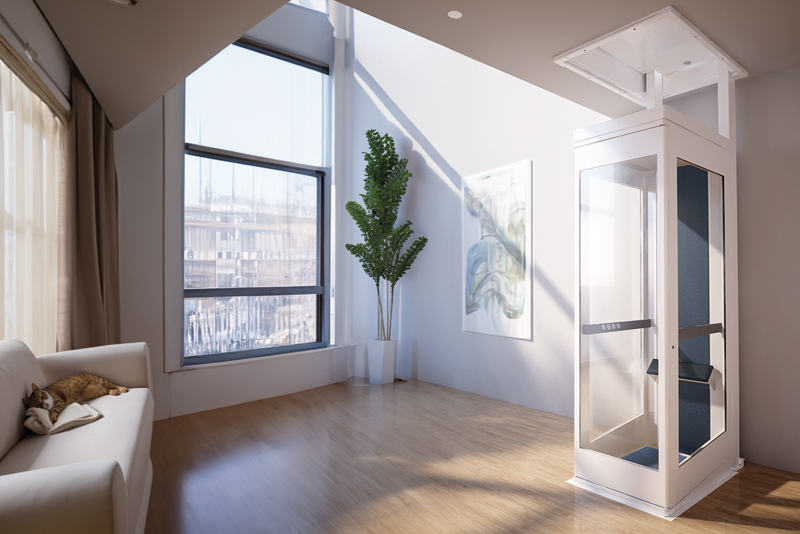
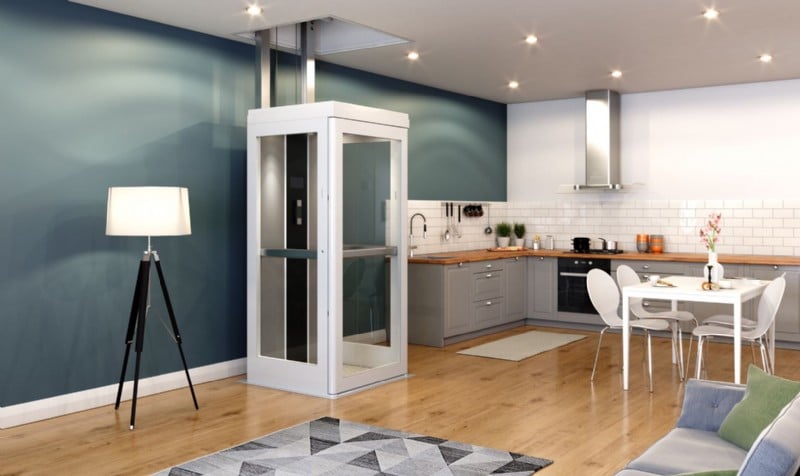
Pollock residential elevators are designed to provide access
between two floors without requiring construction of a complete
conventional elevator shaft.
Through-Floor DesignTwo StopsCompact Footprint
The elevator travels along a supporting rail system and passes
through a secured opening between floors.
The Pollock elevator is largely self-contained, which can reduce the
amount of construction and mechanical space required compared with a
traditional hoistway elevator.
Different cab sizes and optional features may be available depending on
the homeowner’s needs, available room and regional product offering.
↕
Two-Floor Travel
Designed primarily to connect two levels, such as a main floor and
bedroom level or a main floor and basement.
⌂
Reduced Construction
Does not require a full conventional hoistway or separate machine
room.
◫
Modern Enclosure
Large vision panels and a light-colored frame allow the elevator to
blend into many residential interiors.
Advantages
No conventional elevator shaft
Smaller footprint than many traditional elevators
Quiet travel with soft starting and stopping
Suitable for many existing homes
Optional seating, handrails and powered doors
Considerations
Primarily limited to two floors
Requires a properly positioned floor opening
Placement depends on the home’s structure
Not suitable for every wheelchair or scooter
Our assessment: Pollock is one of the best choices for
homeowners who want a practical two-floor elevator with less
construction than a traditional hoistway system.
Best Compact Modern Elevator
Bruno Connect Home Elevator Review
The Bruno Connect is a self-contained through-floor elevator
designed for smooth and quiet travel between two levels.
ConnectShaftlessTraction Drive
Because it does not require a full traditional hoistway, the Connect
may be easier to incorporate into an existing home than a
conventional residential elevator.
The Connect uses a modern enclosed cab with large transparent panels,
interior lighting and a traction drive system. Different cab sizes and
cabin heights may be available.
Optional features can include a handrail, fold-down seat, powered door,
upgraded flooring, customized colors and smart-control integration.
Advantages
No conventional hoistway or deep pit
Compact, self-contained design
Quiet operation and soft start and stop
Large vision panels and modern styling
Several comfort and convenience upgrades
Considerations
Designed primarily for two-level travel
Requires an opening through the floor
Less customizable than some hoistway elevators
Cab size should be checked for mobility devices
Our assessment: Bruno is a good choice for homeowners
seeking an attractive, compact and easy-to-use elevator for travel
between two levels.
Best Custom-Built Elevator
Inclinator Elevette Review
The Inclinator Elevette is a highly customizable traditional home
elevator that can be integrated into a renovation or new home.
Cable DrumHydraulicMachine-Roomless
Homeowners can choose from different drive systems, cab sizes,
interior styles, doors, fixtures and accessories.
Depending on the selected configuration, the Elevette can serve several
landings and provide a larger cab than many compact through-floor
elevators.
Its custom approach makes it particularly well suited to homes where the
elevator must coordinate closely with surrounding architecture,
cabinetry, doors and interior finishes.
Advantages
Several drive-system choices
Extensive cab and finish customization
Can serve several floors
Larger-capacity configurations available
Long-established American manufacturer
Considerations
Requires a properly constructed hoistway
Longer design and installation process
Contractor coordination is normally required
Custom choices can substantially increase price
Our assessment: Inclinator is one of the best choices
for homeowners who prioritize customization and want a traditional
elevator integrated into a major renovation or new home.
Understanding Your Options
Types of Home Elevators
The construction requirements, number of floors served and available
space will help determine which elevator type is suitable.
Traditional Hoistway Elevator
Installed inside a constructed vertical shaft and generally able to
serve more floors and accommodate larger cabs.
Best for: New construction, major renovations,
wheelchair accessibility and multi-floor travel.
Shaftless Through-Floor Elevator
Travels through a secured opening between two floors without a full
traditional elevator shaft.
Best for: Existing homes, limited space, two-floor
travel and reduced construction.
Panoramic Glass Elevator
Uses a transparent integrated enclosure, allowing the elevator to
become a visible architectural feature.
Best for: Luxury homes, open interiors and
homeowners who prioritize design.
Wheelchair-Accessible Home Elevators
A wheelchair-accessible home elevator must provide enough room for the
wheelchair, user and any necessary attendant. Door width, cab dimensions,
entry configuration, turning space and rated capacity must all be
evaluated.
Some compact through-floor elevators may accommodate certain wheelchairs,
but not every elevator will fit every wheelchair or mobility scooter.
Measure the mobility device before selecting a model.
Pricing Guide
How Much Does a Home Elevator Cost?
Professionally installed residential elevators generally start at
approximately $35,000 and can cost
$80,000 or more.
Through-floor elevators commonly fall toward the lower or middle portion
of the range because they do not require a complete conventional
hoistway. Traditional elevators generally start higher once the elevator,
shaft construction and site preparation are included. Panoramic glass
elevators are often the most expensive category.
AmeriGlide pricing note: AmeriGlide currently publishes
residential elevator equipment prices starting at $15,999. This is not a
complete installed-project price. Shipping, installation, floor openings or
hoistway construction, electrical work, permits and finishing may add
substantially to the final cost.
Elevator Type
General Price Range
Important Notes
Through-floor or shaftless
Approximately $35,000–$60,000
Usually requires less construction but still needs a floor
opening, electrical work and professional installation.
Traditional home elevator
Often starts near $50,000 and increases from there
Hoistway construction, doors, number of stops, cab size and
finishes can significantly affect total cost.
Panoramic glass elevator
Often starts near $80,000
Premium materials, transparent enclosures and architectural
integration generally result in higher pricing.
Factors That Affect Home Elevator Pricing
Elevator Type
Traditional, through-floor and panoramic elevators have different
equipment and construction requirements.
Number of Floors
Each additional landing, opening and foot of travel can increase the
project price.
Hoistway Construction
Framing, drywall, structural reinforcement, doors and finishing work
may be required.
Cab Size
Larger and wheelchair-accessible cabs may require more equipment and
space.
Doors and Entries
Automatic sliding doors and multiple entry sides normally cost more
than basic manual configurations.
Interior Finishes
Custom wood, glass, metal, flooring, mirrors, lighting and fixtures
can increase pricing.
Electrical Work
Dedicated circuits, disconnects, lighting and backup systems may be
required.
Permits and Inspections
Local plan reviews, permits and inspections may add to the total
project cost.
Site Preparation
Existing utilities, floor structures and surrounding rooms may need
to be modified.
Online cost ranges are preliminary estimates. An exact price requires a
home evaluation and a detailed review of the elevator model, location,
construction requirements and local building codes.
Qualified technicians install the rails, cab, drive equipment, doors,
controls and safety systems.
Inspection and Training
The elevator is inspected where required, and the homeowner receives
operating and safety instructions.
Accessibility and Convenience
Benefits of Installing a Home Elevator
✓
Improved Safety
Reduces the need to repeatedly climb stairs when balance, endurance
or mobility is limited.
♿
Wheelchair Access
Properly sized elevators can provide floor-to-floor access without
transferring from a wheelchair.
⌂
Aging in Place
Helps make a multi-level home suitable for changing mobility needs
over time.
↕
Greater Independence
Allows users to move between floors without relying on another person
for physical assistance.
▣
Household Convenience
Can make it easier to move groceries, laundry, luggage and permitted
household items between floors.
★
Attractive Design
Modern elevators are available with customized wood, glass, metal and
architectural finishes.
Compare Accessibility Options
Home Elevator vs. Stair Lift
Feature
Home Elevator
Stair Lift
User position
Inside an enclosed or partially enclosed cab
Seated on a chair attached to the staircase
Wheelchair use
Possible with a properly sized elevator
User normally transfers out of the wheelchair
Construction
Moderate to extensive, depending on elevator type
Usually minimal
Typical cost
Approximately $35,000 to $80,000+
Significantly less expensive
Floors served
Two or more, depending on the model
One staircase per installation
Staircase obstruction
No equipment installed on the stair treads
Rail and parked chair remain on the staircase
Household items
Can carry permitted items within rated capacity
Limited carrying ability
Installation time
Longer planning and construction process
Often installed relatively quickly
A stair lift is usually the better choice when affordability, speed and
minimal construction are the priorities.
A home elevator may be preferable when wheelchair accessibility, multiple
floors, larger capacity, home design or long-term planning are more
important.
Buyer Checklist
How to Choose the Best Home Elevator
Determine Who Will Use the Elevator
Consider whether it will be used by one standing passenger, several
passengers, a walker user, a wheelchair user or a caregiver accompanying
the primary user.
Measure Mobility Equipment
Record the wheelchair or scooter’s width, length, weight and turning
requirements. Confirm the elevator’s usable interior dimensions rather
than relying only on its external footprint.
Decide How Many Floors Must Be Served
Many through-floor elevators serve only two levels. A traditional
elevator will normally be needed when the elevator must reach three or
more floors.
Evaluate Available Space
Possible locations may include:
A living-room corner
A bedroom or hallway
Stacked closets
An attached garage
An open area beside the staircase
An exterior addition attached to the home
Consider Current and Future Mobility Needs
An elevator selected for a standing passenger today may eventually need
to accommodate a walker, wheelchair or caregiver.
Review Construction Requirements
Ask whether the elevator requires:
A complete hoistway
A supporting wall or rail structure
A floor opening
A pit below the lowest landing
Overhead clearance
A separate machine room or equipment cabinet
Dedicated electrical service
Structural reinforcement
Compare Safety Features
Depending on the model, features may include:
Door interlocks
Obstruction sensors and safety edges
Emergency stop controls
Emergency lighting
Battery lowering or backup power
Manual emergency lowering
Alarm and communication systems
Handrails and non-slip flooring
Ask About Local Service
Confirm who will handle warranty work, routine maintenance, repairs and
emergency service after installation.
Request an Inclusive Quote
Determine whether the quote includes:
Elevator equipment
Shipping and delivery
Professional installation
Construction and finishing work
Electrical work
Permits and inspections
Taxes
Warranty coverage
Maintenance or service plans
Compare Home Elevator Options
Find out which traditional, shaftless or panoramic elevator models are
suitable for your home and receive customized pricing.
Professionally installed home elevators generally start at
approximately $35,000 and can exceed $80,000. The elevator type,
number of floors, cab size, finishes, doors, construction and local
requirements affect the final price.
Can a home elevator be installed in an existing house?
Yes. Traditional hoistway elevators and compact through-floor
elevators can both be installed in existing homes when enough space
and structural support are available.
Does a residential elevator need a shaft?
Not always. Traditional elevators require a constructed hoistway.
Through-floor models such as AmeriGlide Affinity, Pollock, Bruno
Connect and Savaria Telecab travel through a secured floor opening
without a full conventional shaft.
Can a home elevator fit inside existing closets?
Stacked closets can sometimes be converted into an elevator
hoistway. The available dimensions, structure, utilities, door
positions and local code requirements must first be evaluated.
Are home elevators wheelchair accessible?
Some models are wheelchair accessible. The usable cab dimensions,
doorway, entry arrangement and rated capacity must be appropriate
for the wheelchair and user.
How many floors can a residential elevator serve?
Through-floor elevators commonly serve two levels. Traditional
residential elevators may serve several floors, depending on the
elevator model, travel distance and local regulations.
How long does home elevator installation take?
The equipment installation may take several days once the home is
ready. The complete project may take weeks or months when design,
manufacturing, permitting, construction and inspections are
included.
What happens to a home elevator during a power outage?
Many home elevators include emergency lowering, backup batteries,
emergency lighting or manual lowering features. The exact procedure
depends on the selected model.
Does a home elevator require regular maintenance?
Yes. Residential elevators should be professionally inspected and
serviced according to the manufacturer’s recommendations and any
applicable local requirements.
Do I need a building permit for a home elevator?
Permits and inspections are required in many jurisdictions. The
elevator provider and contractor should explain the specific
requirements for your location.
Can a residential elevator carry laundry and groceries?
Home elevators can generally carry passengers and permitted
household items as long as the elevator’s rated capacity and
operating instructions are followed.
What is the best home elevator brand?
There is no single best brand for every home. AmeriGlide stands out for
published starting prices and its mix of indoor and outdoor models.
Savaria offers one of the broadest product selections. Pollock and Bruno
are strong shaftless options, while Garaventa and Inclinator offer highly
customizable traditional elevators.
Is a home elevator better than a stair lift?
A home elevator may be better for wheelchair access, multiple floors
and long-term accessibility planning. A stair lift is generally
more affordable and requires much less construction.
How do I receive an accurate home elevator quote?
Schedule an in-home evaluation. The provider will review the home’s
layout, floors served, intended users, available space and
construction requirements before recommending models and providing
pricing.
Editorial disclosure: Seniors Bulletin provides
educational information to help seniors, caregivers and homeowners compare
accessibility products. Our selections are based on available manufacturer
specifications, product configurations, installation flexibility and
suitability for common residential applications. We have not physically
tested every elevator listed. Product specifications, prices, warranties,
availability and service areas may change. Confirm current information with
an authorized dealer before purchasing.